Why the Street You Live On Matters More Than the House You Live In
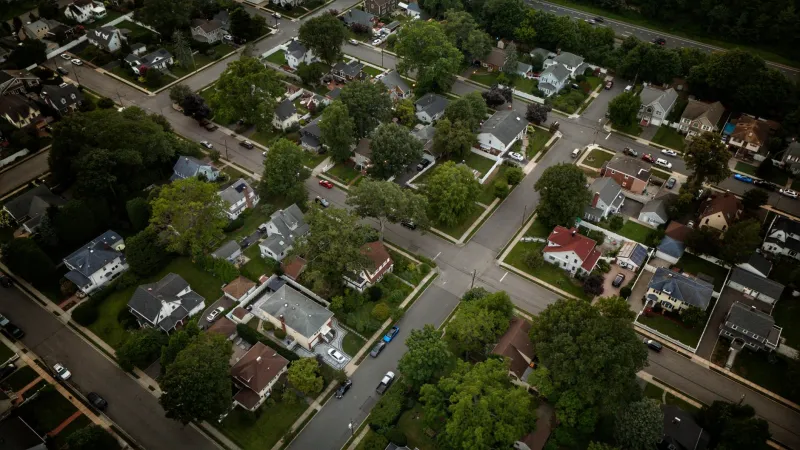
Picture two houses. Same floor plan. Same age. Same curb appeal. They sit maybe 200 feet apart — one on the north side of Maple Street, one on the south. But when they hit the market, one sells in a week over asking price. The other lingers for two months and closes below list.
What happened?
Nothing you can see with your eyes. Everything you can find if you know where to look.
Neighborhood boundaries — the invisible kind — are one of the most powerful and least-discussed forces in real estate. They don't show up on a listing. They don't get mentioned at open houses. But they shape property values, buyer pools, and even how you experience daily life in ways that square footage and granite countertops simply can't compete with.
The School District Line Is the Most Expensive Line in Real Estate
Let's start with the big one, because it affects more buyers than almost any other factor: school districts.
In most American cities and suburbs, school district boundaries don't follow logic — they follow history, politics, and old demographic maps that were drawn decades ago. The result is that two homes on the same block can sit in entirely different districts, with entirely different buyer demand.
Families with school-age kids (and plenty of buyers who don't have kids but understand resale value) will pay a significant premium to land on the right side of that line. Studies have consistently shown that homes in higher-rated school districts sell for anywhere from 10% to 25% more than comparable homes in adjacent, lower-rated zones.
If you're selling, knowing exactly which district your home falls in — and how that district is perceived locally — is non-negotiable information. Don't assume. Look it up. Confirm it with the district directly. Then make sure that information is front and center in your marketing.
Utility Zones and Municipal Boundaries: Boring on Paper, Costly in Practice
Here's one that surprises a lot of people: the difference between city utilities and county utilities — or between two different water and sewer districts — can meaningfully impact what a buyer is willing to pay.
City water and sewer tends to read as more reliable and consistent to buyers, especially compared to well and septic systems in more rural areas. But even within suburban markets, different municipal service zones can mean different property tax rates, different trash pickup schedules, different road maintenance responsibilities, and different building codes for future renovations.
A buyer who's planning to add a garage or finish a basement will care a lot about whether they're dealing with city permits or county permits. Those processes can look very different from one another, even when the homes are geographically close.
If your home sits near a municipal boundary, do the homework upfront. Know your tax jurisdiction. Know your utility providers. Buyers who ask these questions mid-transaction can get cold feet fast when the answers are fuzzy.
Cultural Enclaves and Neighborhood Identity: The Soft Factors That Drive Hard Decisions
Not every boundary is administrative. Some of the most powerful ones are cultural.
Many American cities have neighborhoods with strong identity — whether that's a historically Black neighborhood with deep community roots, a Vietnamese business district that's been a cultural anchor for decades, an LGBTQ+ enclave that's become a hub for arts and nightlife, or an immigrant community that maintains its own institutions, festivals, and gathering places.
These identities create real buyer demand. People aren't just buying a house — they're buying belonging, proximity to community, access to familiar food, language, and culture. That demand translates directly into price.
But here's the flip side: gentrification and neighborhood change can complicate these dynamics quickly. When outside investment starts flowing into historically undervalued neighborhoods, property values rise — sometimes dramatically — but so does displacement pressure. For sellers in these areas, timing and positioning matter enormously. The narrative around your neighborhood is shifting in real time, and how you tell that story in your listing can either attract the right buyers or miss them entirely.
Income Demographics and the Perception of Safety
Buyers make decisions based on perception as much as reality, and nowhere is that more evident than when they're evaluating neighborhood demographics and safety.
Crime statistics, median household income, and neighborhood walkability scores are all publicly available data that buyers research obsessively before making offers. Even if your home is a gem, being on the wrong side of a perceived income or safety boundary can suppress your buyer pool significantly.
This isn't just about crime rates — it's about what buyers imagine their daily life will feel like. Will they feel comfortable walking to the coffee shop? Will they feel okay about their kids riding bikes around the block? These emotional calculations happen fast and they're hard to overcome with a beautifully staged living room.
As a seller, the most useful thing you can do is understand how your neighborhood is perceived — not just how it actually is. Walk the block. Check the neighborhood apps and forums. Read what people are saying online. Then think about how your listing language and marketing materials can address those perceptions honestly and compellingly.
How Savvy Sellers Use Boundary Knowledge to Their Advantage
Knowing these invisible lines exist is one thing. Using that knowledge strategically is another.
Here's how smart sellers approach it:
Lead with your strongest boundary advantage. If you're in a top-rated school district, say so — loudly and early. Don't bury it in the fine print. Make it the second sentence of your listing description.
Be honest about the boundaries that might give buyers pause. A seller who proactively addresses a known concern builds trust. A buyer who discovers something mid-deal loses confidence — and sometimes walks.
Think about your buyer pool, not just your price point. Boundaries affect who is looking at your home. A home in a culturally specific neighborhood may attract a very particular buyer profile. Understanding that profile helps you market smarter.
Work with an agent who knows the micro-geography. This is not the time for someone who covers a three-county area and treats every listing the same. You want someone who can tell you, without looking it up, which side of your street is in which school district — and what that means for your sale.
The Bottom Line: Invisible Lines Are Worth Real Money
Real estate has always been about location. But location isn't just the city or the neighborhood — it's the specific slice of geography your home occupies, and all the invisible lines that slice runs through.
School districts. Municipal zones. Cultural identity. Income perception. These aren't abstract concepts. They're the difference between a bidding war and a price reduction. They're the difference between a buyer who falls in love with your home and one who quietly moves on to the next listing.
At Shelby Sells, we think your home's story deserves to be told completely — including the parts of the story that don't show up on the MLS. Understanding the invisible boundaries around your property isn't just smart selling. It's how you get the outcome your home actually deserves.