Selling Your Home Without Losing Yourself: A Kinder Approach to Getting Ready for Showings
Somewhere between "take down all your photos" and "buyers need to see themselves living here," there's a version of home staging that doesn't feel like an eviction notice for your own memories. I've seen sellers pack their lives into boxes so thoroughly that walking through their own home starts to feel like touring a stranger's place. That's not the goal.
The goal is to help buyers fall in love — without making you fall out of it.
If you're getting ready to list and the idea of depersonalizing your space makes your stomach drop a little, you're not alone. This is one of the most emotionally complex parts of the selling process, and it doesn't get talked about enough. So let's actually talk about it.
Why Buyers Need Breathing Room (And What That Really Means)
First, let's clear up a common misconception. When agents say buyers need to "see themselves" in your home, they don't mean your house needs to look like a furniture catalog. What they mean is that buyers shouldn't feel like they're intruding on someone else's life.
There's a big difference between a home that feels lived in and one that feels claimed. A cozy reading nook with a neutral throw blanket and a stack of books? Inviting. A fridge covered in your kids' school photos, sports schedules, and three years of refrigerator magnets from every vacation you've ever taken? That's a lot of you — and while it's wonderful that you have a full, rich life, it makes it hard for buyers to mentally move in.
The sweet spot is warmth without ownership. Comfort without biography.
The Photo Question (It's More Nuanced Than You Think)
Taking down family photos is the advice most sellers dread, and it's also the one that gets applied too bluntly. Here's a more practical take:
Large, prominent family portraits — especially ones that dominate a wall or a hallway — are worth relocating during showings. They draw attention to who lives there rather than what the space looks like.
Smaller framed photos scattered naturally around the home aren't necessarily deal-breakers, especially if they're tastefully displayed and don't overwhelm the room. A few family snapshots on a bookshelf alongside some decorative objects can actually make a home feel warm rather than cold.
The trick is intention. Are the photos part of the room's overall look, or are they the room's entire personality? Audit each space with that question in mind.
For the photos you do pack away, consider this: instead of tossing them in a box in the garage, create a simple digital album or print a small photo book. It becomes a project rather than a loss — a way to honor those memories while creating space for new ones.
Room-by-Room Swaps That Feel Like Upgrades, Not Erasures
One of the most effective mindset shifts I share with sellers is this: instead of thinking about what you're removing, think about what you're replacing it with.
Kids' rooms: Swap out personalized name signs, themed bedding covered in cartoon characters, and towers of stuffed animals for something more neutral — solid-color bedding, a few well-chosen toys displayed neatly, and maybe a simple piece of wall art. The room still reads as a child's space (which is actually a selling point for families), but it doesn't read as your child's specific space.
Kitchen counters: Clear off the daily chaos — mail, vitamins, the coffee maker you use every day — and replace it with one or two intentional items. A wooden cutting board, a small plant, a bowl of fresh fruit. It feels styled, not sterile.
Bathrooms: Swap out the collection of personal care products for a small set of matching, neutral-labeled bottles. Buyers are weirdly sensitive to bathrooms. A clean, spa-adjacent look goes a long way.
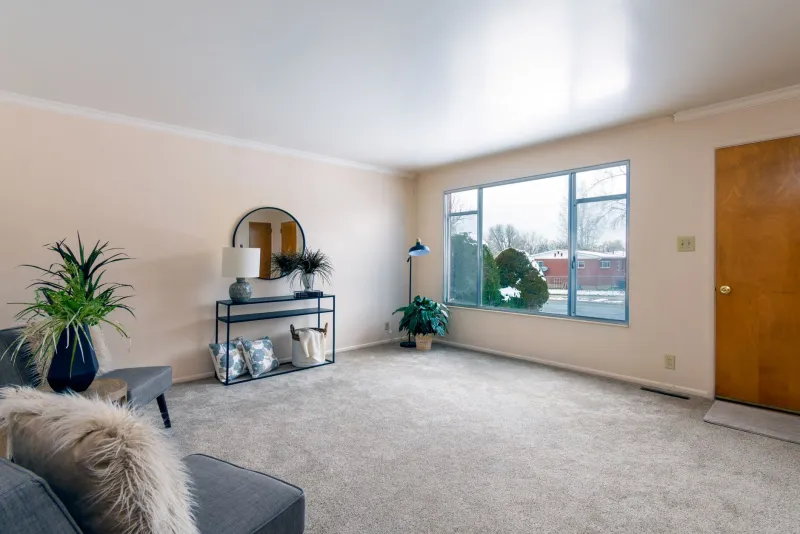
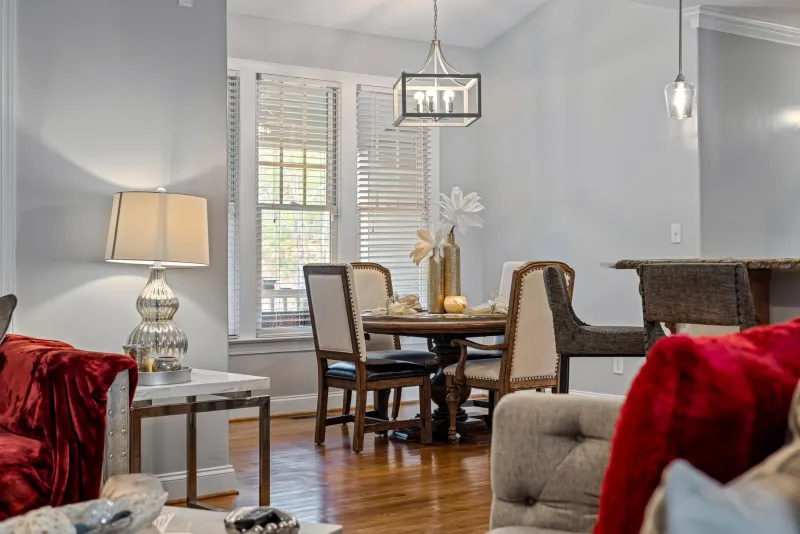
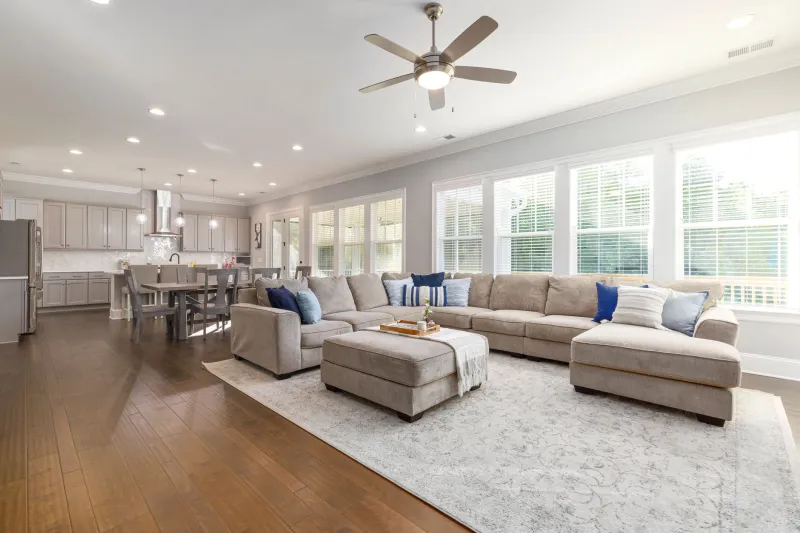
Living spaces: If your sofa is draped in your dog's favorite throw and every surface has a remote control on it, do a quick reset before showings. But don't strip the room bare — a couple of decorative pillows, a candle, and a coffee table book create the kind of aspirational-but-livable feeling that photographs beautifully and shows even better.
Keeping Yourself Emotionally Grounded During the Listing Period
Here's something nobody tells you: living in a partially staged home while your house is on the market is genuinely strange. You're in a weird in-between state — still living your life, but in a version of your home that's been dressed up for someone else.
A few things that help:
Create a "real life" zone. If you have a room that's less likely to be shown — a home office, a basement, a mudroom — let that space stay fully yours during the listing period. Don't stage it into oblivion. Give yourself somewhere to exist normally.
Make the reset routine manageable. Develop a quick pre-showing checklist that takes 20–30 minutes, not two hours. When the process feels doable, it stops feeling punishing.
Remind yourself what the staging is for. You're not erasing your life. You're creating the conditions for someone else to imagine theirs. That's actually a generous act. You're handing off a space you loved to someone who will love it differently.
The Homes That Sell Best Are the Ones That Feel Ready
After working with sellers across a range of situations — empty nesters, young families, people going through major life transitions — I've noticed that the homes that sell fastest and strongest aren't always the ones with the most expensive staging. They're the ones where the seller was genuinely ready to let go.
That readiness shows up in little ways: the way a room is arranged, the care taken with small details, the sense that the home has been honored and prepared rather than just emptied out. Buyers feel it, even if they can't name it.
You don't have to erase your story to sell your home. You just have to leave enough blank space for someone else's story to begin.
And if you're not sure where to start, that's what I'm here for.