How to Pack Up Your Personal Life Without Making Your Home Feel Like a Hotel
Let's get one thing out of the way: the advice to "depersonalize your home before listing" is correct. But the way it's often executed? That part needs work.
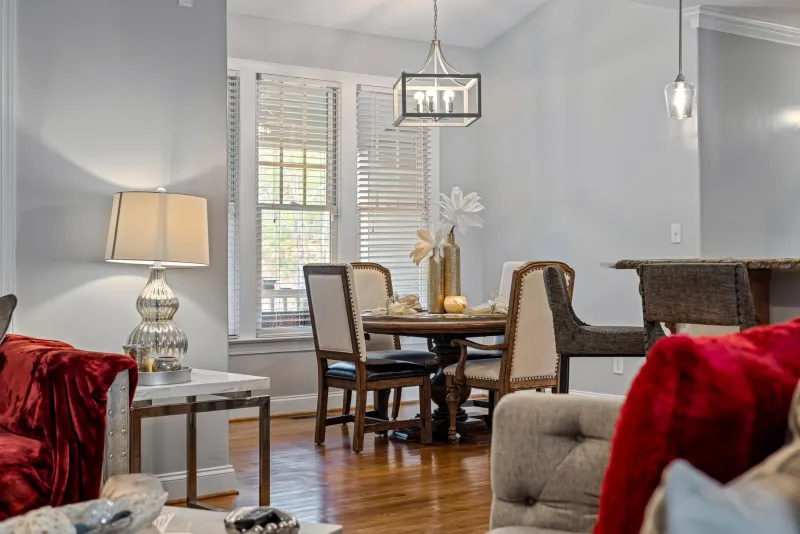
Too many sellers swing so hard in the direction of neutrality that they end up with a house that feels cold, echoey, and vaguely sad — like a vacation rental that nobody's enjoyed yet. Buyers walk in, see beige walls, a lone throw pillow, and three pieces of generic wall art from a discount home goods store, and feel... nothing. No warmth. No imagination. No urgency to make it theirs.
The real goal of depersonalization isn't to remove you — it's to remove the specifics of you, while leaving behind the feeling of a home that's been genuinely loved. There's a real difference, and getting it right can be the thing that turns a showing into an offer.
Here's how to do it room by room.
Living Room: Edit, Don't Erase
Remove: Family photos (yes, all of them), personalized items like monogrammed pillows or custom name signs, religious or political décor, trophies and awards, kid artwork taped to the wall.
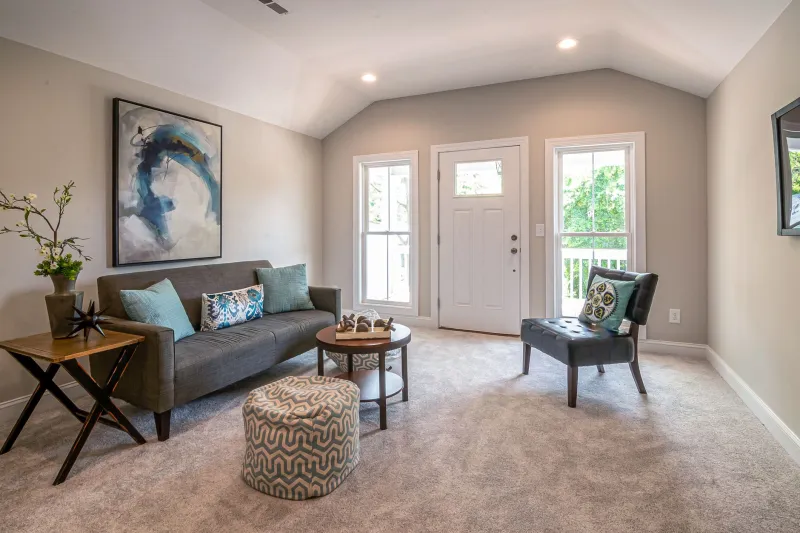
Keep: Cozy textiles in neutral or soft tones, a curated selection of books (spines facing out is fine — it adds visual texture), one or two pieces of art that are interesting without being divisive, a simple plant or vase of fresh stems.
The move: Swap out the gallery wall of vacation photos for a single oversized piece of abstract or landscape art. You're not making the room impersonal — you're making it universally personal. Anyone can imagine their life in a room with a beautiful piece of art. Nobody can imagine their life surrounded by your family's Christmas card photos.
Also: clear the coffee table almost entirely. One decorative object, maybe a small stack of coffee table books. That's it. Clutter is the enemy of imagination.
Kitchen: Functional, Not Sterile
Remove: Refrigerator magnets and photos (this one surprises people, but a fridge covered in kids' drawings reads as "someone else's house" immediately), personalized mugs displayed on open shelving, excessive small appliances on the counter, anything that says a specific family's name.
Keep: A bowl of fresh fruit, a clean dish towel in a simple color, a small potted herb on the windowsill if you have one, one or two cookbooks on the shelf if they look good.
The move: The kitchen is where buyers have some of their most powerful emotional reactions — they're already imagining cooking dinner here. Make it feel ready without making it feel unused. A single cutting board leaning against the backsplash, a coffee maker that looks intentional rather than just left behind — these small touches say "this kitchen works" without screaming "this is Susan's kitchen."
Primary Bedroom: Serene, Not Sad
Remove: Personal photos on the nightstand, clothing visible anywhere (yes, that means the chair), excessive pillows with phrases or names on them, prescription bottles, anything overtly intimate.
Keep: Crisp, hotel-quality bedding in white or soft neutrals, two matching nightstands with simple lamps, one piece of art above the bed, a plant if the light supports it.
The move: Think of a boutique hotel room — not a chain hotel, but the kind of independent place that feels thoughtfully designed. That's your target. The bed should look like the most comfortable place in the world. Layer the bedding. Add a throw at the foot. Buyers should walk in and think I want to sleep here tonight, not I wonder whose house this is.
One often-overlooked detail: clear every surface in the bathroom attached to the primary suite. Every product, every toothbrush, every loofah. A clean, empty bathroom counter signals cleanliness and space in a way that nothing else does.
Kids' Rooms: The Trickiest Balance
Remove: Name decals on the wall (these are a dead giveaway and limit buyer imagination), excessive toy clutter, themed décor that's very age or character specific (the full dinosaur or princess room).
Keep: One or two age-appropriate toys displayed neatly, simple bedding, a bookshelf with books organized by color or size if possible.
The move: A child's room doesn't need to be staged into a generic guest room — buyers with kids actually want to see that children have lived happily in the space. But there's a difference between "kids live here" and "this specific child named Emma who loves Frozen lives here." Aim for the former. A tidy, cheerful room with a few quality toys says this is a great home for a family. A room plastered with one kid's entire personality says this room belongs to someone else.
Home Office: Capability Over Clutter
Remove: Personal papers and files (obvious, but worth saying), excessive cords, family photos on the desk, anything that makes the space feel cramped or chaotic.
Keep: A clean desk surface, a decent chair, good lighting, one plant or simple decorative object.
The move: The home office has become one of the most scrutinized rooms in any listing since remote work became mainstream. Buyers want to see that it works as a workspace — good light, enough room, a sense of quiet. Stage it to show capability, not personality. A clean desk with a simple lamp and a small plant says "you could be productive here." A desk buried under your actual work says "someone else is productive here."
The One Rule That Ties It All Together
If there's a single principle behind all of this, it's this: remove the specific, preserve the warm.
Specific things — names, faces, strong personal tastes — remind buyers that someone else lives here. Warm things — soft textures, natural light, fresh smells, a sense of care — remind buyers that someone lives here, and that the house has been good to them.
You want buyers to walk in and feel at home. Not in your home. In their home — the one they're already starting to imagine.
At Shelby Sells, we think of this process as one of the most important things a seller can do before going to market. It costs almost nothing, it dramatically improves listing photos, and it creates the kind of emotional openness that makes buyers move fast. Your story has been told in this house. Now it's time to leave a little space for theirs.